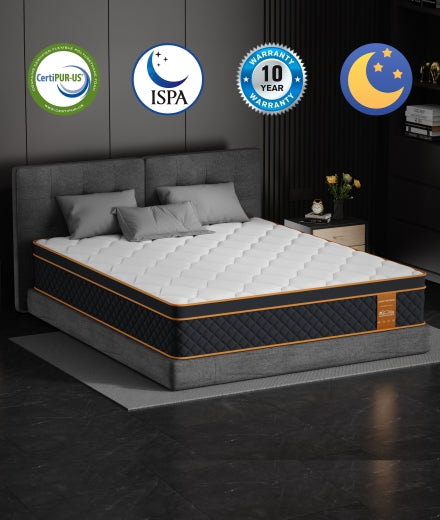
Foam vs. Spring Mattress: Which Is Best for You?
Buying a new bed can be overwhelming. With many types of mattresses available, it can be difficult to figure out which one is right for you. This article discusses the common concerns regarding memory foam and spring mattresses.
Spring mattresses have been traditional for decades, offering bouncy support with various coil and spring types. In contrast, foam mattresses are modern with soft, dense features that mold to the body and evenly distribute weight.
What Is a Foam Mattress?

Foam mattresses consist of various types of foam, providing both support and softness. Memory foam, which was invented in the 1970s, is dense and durable, with a lifespan of about 10 years. It is known for heat-wicking abilities and even weight distribution.
Best for:
- People seeking moldable support
- Those sharing a bed
Price Range: $300-$2,500+
Types of Foam Mattresses
- Traditional memory foam: Conforms to the body and traps heat.
- Open-cell foam: Less dense and softer, allowing for better airflow.
- Gel foam: Contains gel pods for added support and bounce.
Construction
Memory foam mattresses consist of several foam layers with a polyurethane base. The layers can vary in density, contributing to overall durability and firmness, measured by indentation load deflection (ILD).
Foam Mattress Pros
- Molds to body contours
- Keeps the sleeper cool
- Soft support for neck, spine, and hips
- Effective motion isolation
Foam Mattress Cons
- Generally heavier than spring mattresses
- Potential initial chemical odor from volatile organic compounds (VOCs)
- Less reactive than spring mattresses
What Is a Spring Mattress?

Spring mattresses are traditional options, providing excellent support for back sleepers or those requiring firmness.
Best for:
- Back sleepers
- Those preferring bouncy lift
Average Price Range: $200-$1,200+
Types of Spring Mattresses
Different types of spring mattresses can be identified by their coils:
- Pocket coils: Individually wrapped for independent motion
- Offset coils: Durable with hourglass shape
- Bonnell coils: Standard in budget options, offering basic support
- Continuous coils: Offer extra support due to their design
Construction
Innerspring mattresses typically consist of three layers: a high-density foam base, coil springs in the middle, and comfort layers above.
Spring Mattress Pros
- Good back support
- Wide range of firmness levels
- Generally budget-friendly
Spring Mattress Cons
- Wears out faster than foam alternatives
- Can be noisy with movement
- Provides less pressure relief
Foam vs. Spring Mattresses: Main Differences
Temperature
Spring mattresses allow for better airflow, but modern memory foams now offer enhanced cooling features as well.
Best option: Cooling foam mattress or spring mattress
Movement
Memory foam excels in motion isolation, making it ideal for those sharing a bed.
Best option: Memory foam mattress
Support
Memory foams conform to body curves, while spring mattresses may offer uneven support.
Best option: Memory foam mattress or spring mattress with advanced coil systems
Durability
Spring mattresses last about five to eight years, whereas memory foam can last longer based on density.
Best option: Memory foam mattress
Pressure Relief
Memory foam targets pressure points better than spring alternatives, which may lack comfort.
Best option: Memory foam mattress or spring mattress with pocket coils
Cost
Spring mattresses are typically less expensive than high-quality foam mattresses.
Best option: Budget-friendly foam mattress or spring mattress
Sleep Position
Side sleepers often prefer memory foam while back sleepers may benefit from spring mattresses.
Best option: Memory foam mattress; spring mattress with Bonnell or continuous coils
Back Pain
Higher-end spring mattresses may offer some support for back pain, but memory foam is generally better for localized pressure relief.
Best option: Memory foam mattress or higher-end spring mattress
Hybrid Mattresses Are a Happy Medium
Hybrid mattresses combine innerspring systems with foam or gel, providing the advantages of both types for those unsure of their preferences.

FAQs
Are foam mattresses good?
Foam mattresses provide excellent support and less movement across the bed.
Are spring mattresses good?
Spring mattresses offer cooling effects and varying degrees of support and lift.
What’s the difference between innerspring and foam mattresses?
- Temperature: Spring mattresses are cooler
- Movement: Foam mattresses restrict motion
- Support: Foam distributes weight evenly
- Durability: Foam typically lasts longer
- Pressure Relief: Foam is usually better
- Cost: Springs are often more budget-friendly
- Sleep Position: Both can accommodate different sleepers
- Back Pain: Foam may be preferable for relief
Choosing between foam and spring mattresses depends on individual preferences for comfort and support.
Purchase now and enjoy a comfortable sleep. If you need any inquiries, please contact us; we are happy to assist you.
Produced by Dwillar